The worst part of spring for a boat owner isn’t the wait for open water. It’s the pontoon that won’t start. You pull off the cover on the first warm Saturday, turn the key, and get a dead click, or the milky oil that means water froze solid inside the motor while you weren’t looking.
Water is strange stuff. Almost every liquid shrinks as it gets colder, but water does the opposite once it freezes. It expands about 9% in volume, and it does so with enough force to split cast iron. [1]
That one quirk of physics is why a forgotten cup of water left in your outboard can turn into a five-figure repair by April. In central Minnesota, where January means a month of sub-zero nights, the question isn’t whether trapped water will freeze. It’s whether any is left in your boat to do the damage.
This guide walks through the whole job, from the engine to the toons, the way we’d do it for our own boats here in the St. Cloud area. None of it is hard. Most of it is just remembering to do it before the first hard freeze.
Why Minnesota Winters Are So Hard on Boats
Minnesota loves its boats. The state ranks first in the nation for watercraft per capita, with roughly one registered boat for every six residents. [2] Most of them sit idle from October to May.
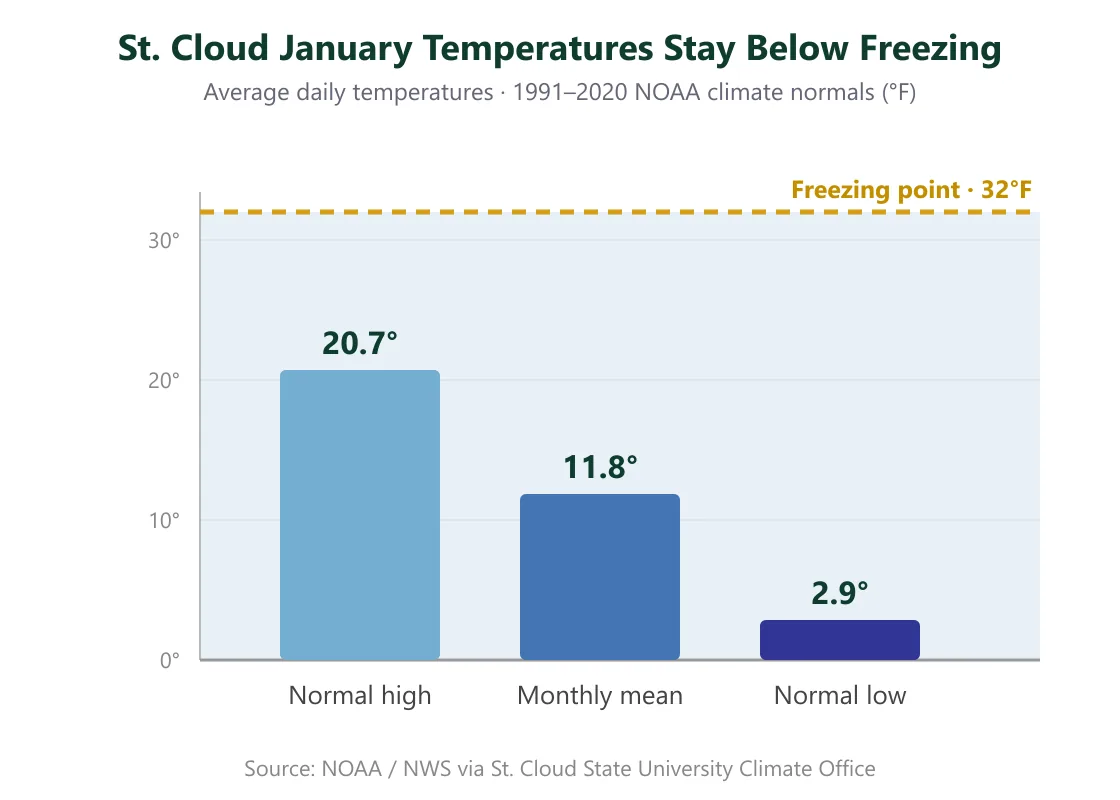
That long off-season is the problem. Using the 1991–2020 climate normals, the air around St. Cloud never warms up enough in January to thaw anything out. [3] The chart below shows how far below freezing the whole month sits, on average.
Add water into the mix, and you have a recipe for damage. Water gets into a marine engine’s cooling passages, the exhaust, the gearcase, and the bilge during normal use. Leave it there, let it freeze, and it pries metal apart from the inside.
Here’s the part owners miss: it isn’t the depth of the cold that breaks a boat; it’s the duration. A single cold night rarely reaches the water deep inside a block. A solid week of it does, every winter, which is exactly what Minnesota delivers.
What Does Freeze Damage Actually Cost?
A lot more than the prevention. When BoatUS analyzed about a decade of its marine insurance freeze claims, it found that the overwhelming majority involved a cracked engine block or exhaust manifold, almost always because water sat in the engine or cooling system through a freeze. [4] The chart below shows how lopsided the claim mix is.
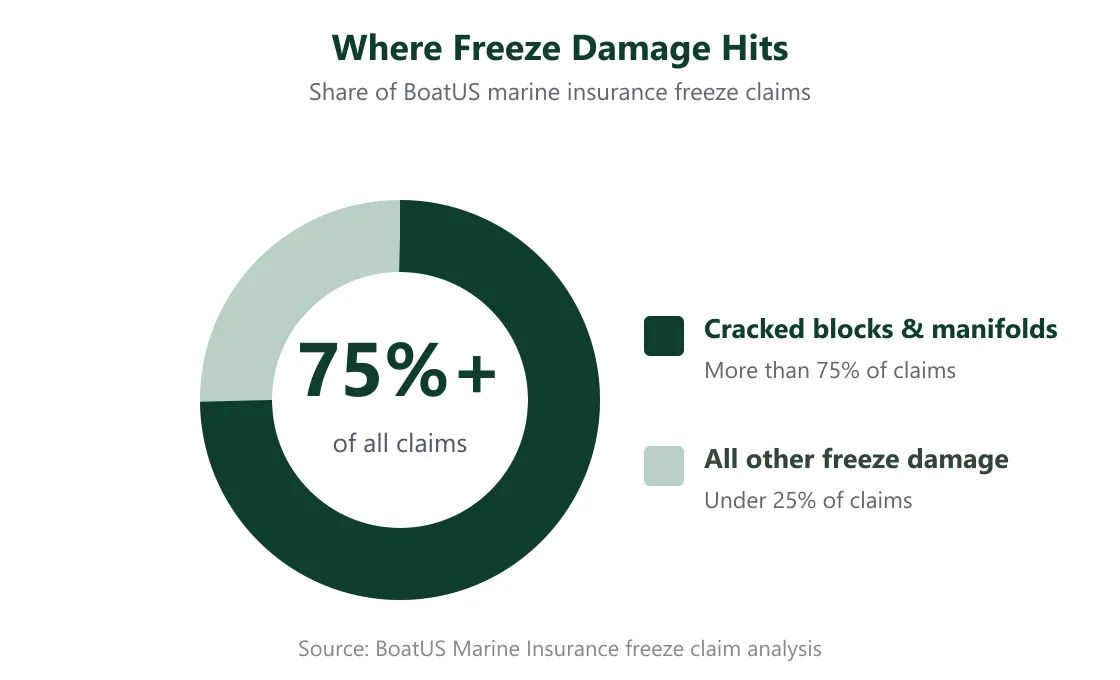
The bill is brutal. Replacing even a small outboard can top $10,000 before labor, and a cracked block can total an older motor outright. Across the country, BoatUS estimates improper storage causes more than $50 million in preventable damage every year. [5]
The encouraging flip side: BoatUS says its winterizing guidance addresses the reasons behind more than 95% of the freeze claims it handled over the past decade. [4] In other words, this is a problem you can almost entirely engineer away with an afternoon of work and a few gallons of antifreeze.
How Do You Winterize the Engine and Fuel System?
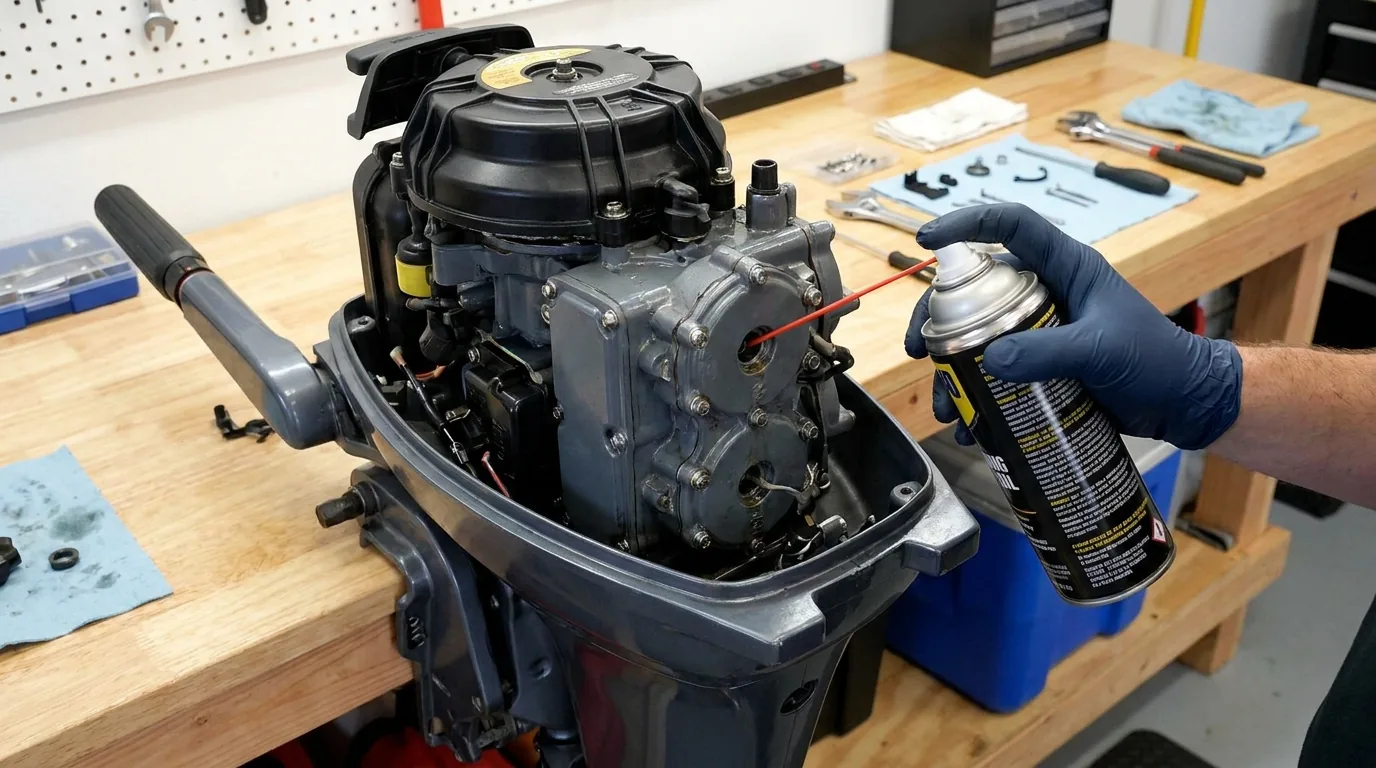
The engine is where freeze claims are won or lost, so start here. The goal is simple: get the water out, get oil onto bare metal, and keep the fuel from going bad. Mercury Marine’s outboard procedure covers all three. [6]
Drain the Water and Add Antifreeze
Run the motor to operating temperature, then drain the cooling system fully and circulate marine (propylene glycol) antifreeze until it runs out the prop. This pushes out any pockets of plain water that would otherwise freeze and crack a passage.
Fog the Cylinders
With the engine warm, spray fogging oil into the cylinders through the spark-plug holes or the air intake. [6] The oil film stops the cylinder walls from rusting while the boat sits for seven months.
Change the Lower-Unit Gear Lube
Drain the gearcase and check the old lube. If it looks milky or chocolate-colored, water has gotten in past a seal. That trapped water can freeze and crack the lower unit, so refill with fresh gear oil before storage, not after.
Treat and Top Off the Fuel
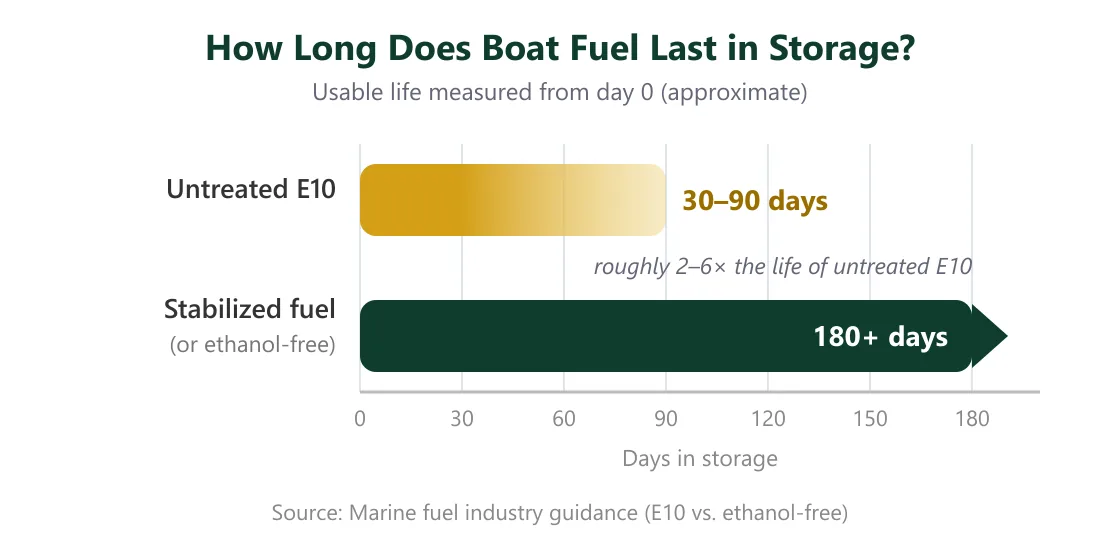
This step trips up more owners than any other, because of ethanol. Most pump gas is E10, and ethanol is hygroscopic, meaning it pulls water straight out of the air. Untreated E10 breaks down fast in storage, while stabilized or ethanol-free fuel holds up much longer. The chart below shows the gap. [7]
The bigger risk with ethanol is water. Once a tank absorbs enough, the fuel undergoes phase separation, which no additive can reverse, so the tank has to be drained.
The fix is easy. Fill the tank to about 95%, add a marine fuel stabilizer, and run the engine a few minutes so treated fuel reaches the carburetor or injectors. A nearly full, stabilized tank leaves almost no room for condensation to form.
How Should You Store a Marine Battery in the Cold?
Cold is hard on batteries, but a dead battery is the one that actually breaks. A fully charged lead-acid battery’s electrolyte stays liquid down to about −67°F. As it discharges, the freezing point climbs fast: a badly run-down battery can freeze near 5°F, and its case can crack. [8] With St. Cloud’s average January low well below that, a weak battery is squarely inside the danger zone.
Cold also robs you of usable power. A battery near freezing delivers well under its rated capacity, and one left to self-discharge all winter slowly slides toward that vulnerable, freezable state. [8]
What to Do
- Charge it fully before storage. Never put away a battery that’s even half down.
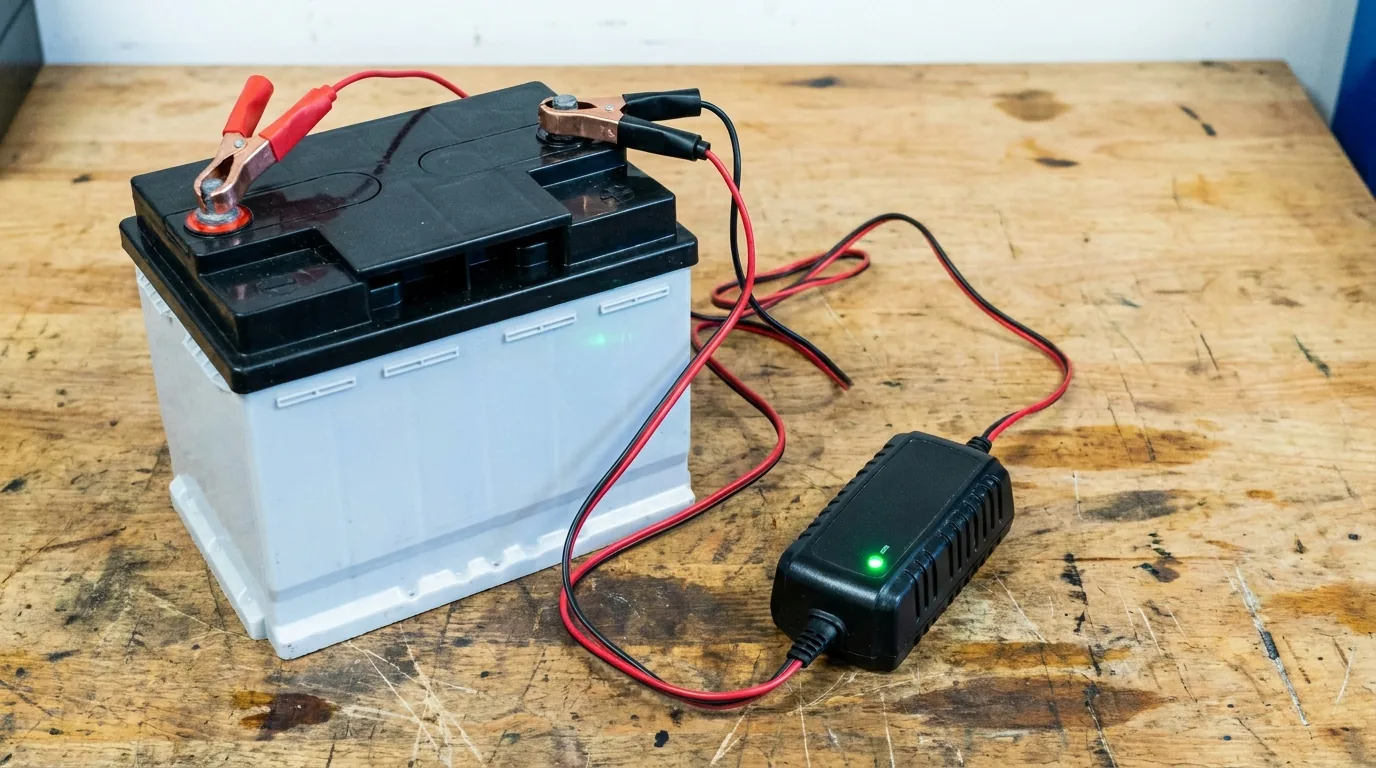
- Keep it on a maintainer. A small automatic trickle charger holds the charge without overcooking the cells.
- Store it dry and off concrete if you can, on a shelf or a board. A heated space is ideal but not required as long as it stays charged.
- Clean the terminals and give them a light coat of dielectric grease to fend off corrosion.
Pontoon-Specific Problems You Can’t Ignore
A pontoon isn’t just a boat with a flat deck. The toons, the furniture, and the open layout create a few headaches that a fishing boat never deals with. Three matter most over a Minnesota winter.
Mice Love a Stored Pontoon
Rodents treat a covered pontoon like a heated cabin: dry, sheltered, and full of nesting material. Discover Boating recommends pulling out all food, removing cushions and seats where mice nest, and protecting wiring with rodent tape before storage. [9]
Be skeptical of the folk remedies, too. Mothballs, dryer sheets, and human hair all get passed around as mouse repellents, but we’ve seen plenty of chewed wiring on boats that were “protected” by a box of dryer sheets. Bet on rodent tape and a stripped, cushion-free interior instead.
Trapped Moisture Means Mildew
Pontoon seats are vinyl over foam, and that foam holds water. Seal a damp boat under a non-breathable tarp, and you build a greenhouse: condensation forms, can’t escape, and mildew blooms across every cushion by spring.
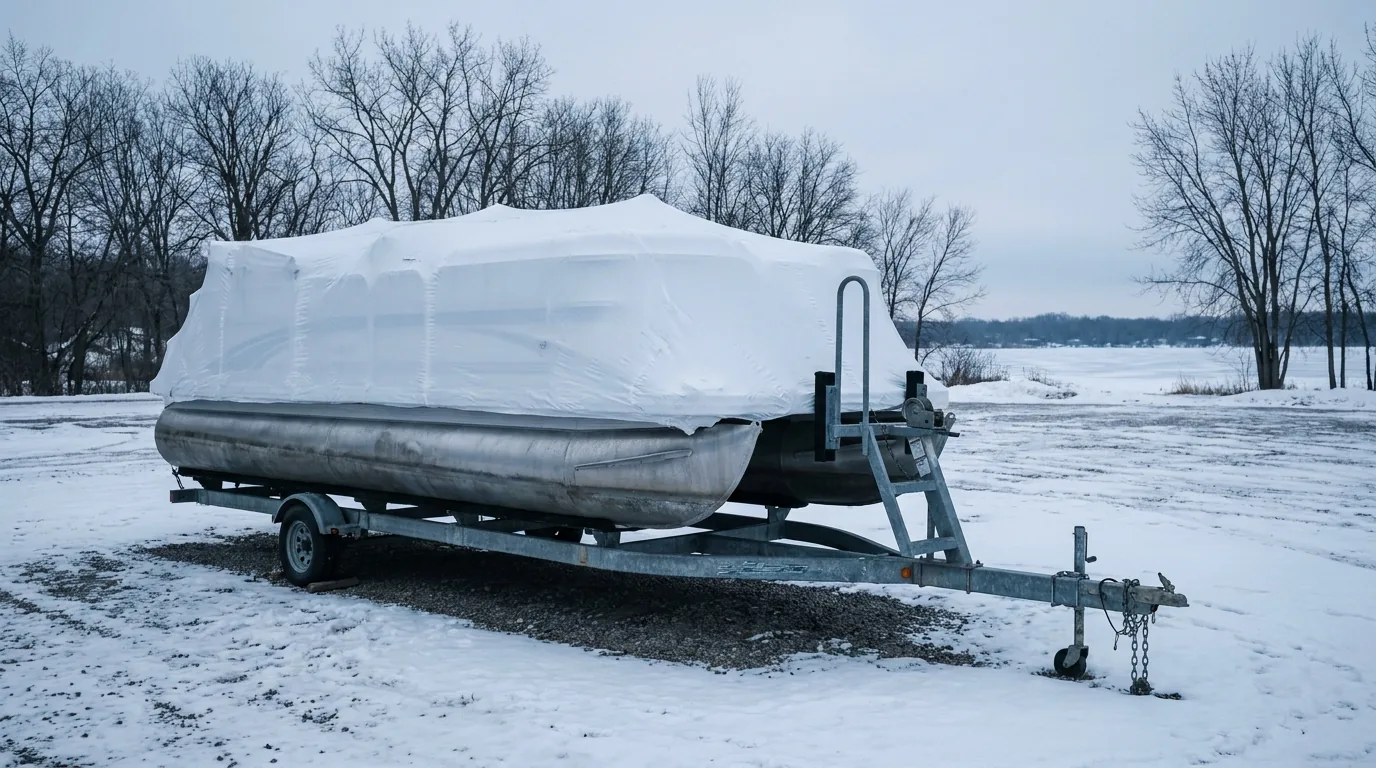
Ventilation is the whole game. A breathable, fitted cover or a properly vented shrink-wrap job lets vapor out while keeping snow and rodents off. A blue poly tarp cinched down tight does the opposite.
Aluminum and Standing Water
Aluminum toons resist rust, but they don’t love sitting in slush and road salt all winter, and trapped water inside a toon can freeze. Rinse the pontoons after haul-out, drain them if they have drain plugs, and get the boat up off bare ground so air can move underneath.
Where You Store the Boat Matters as Much as How
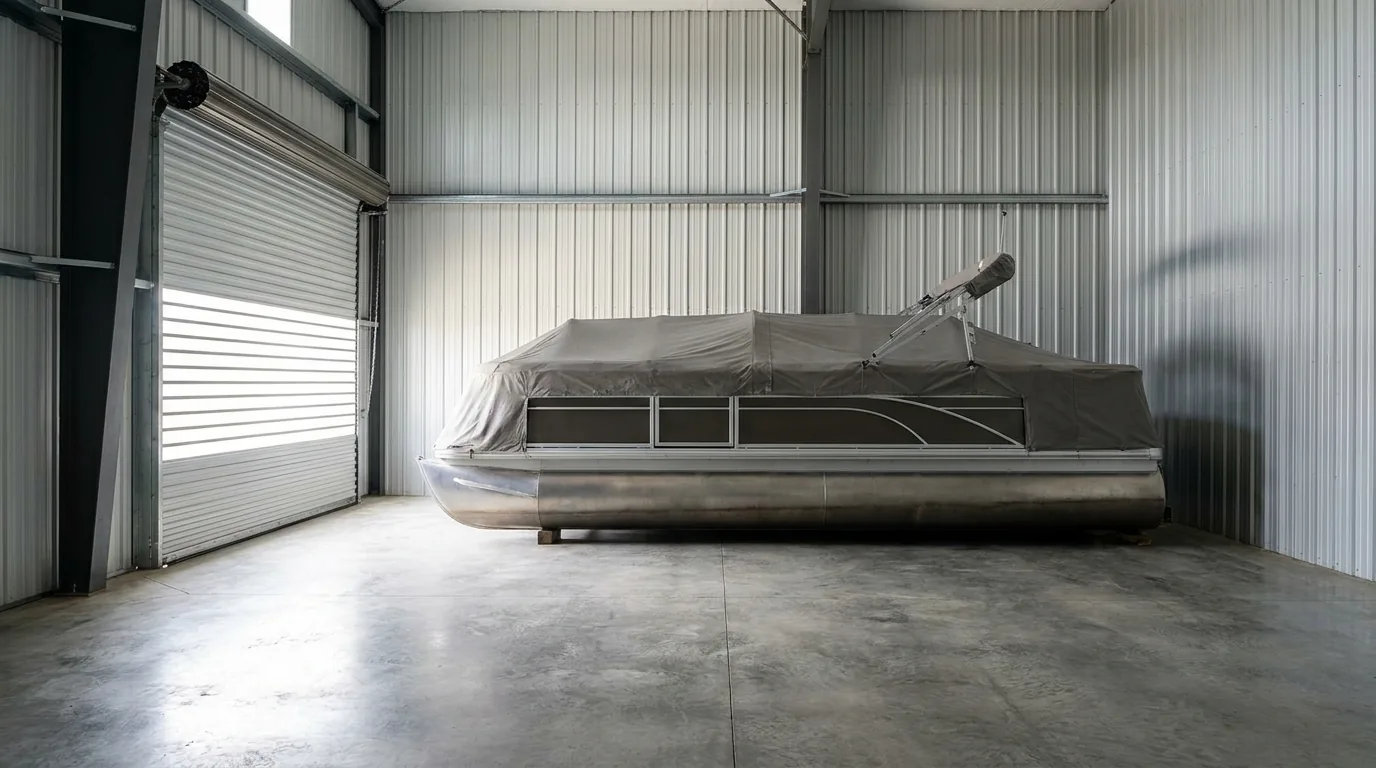
You can do every winterizing step perfectly and still lose ground if the boat spends five months under a snowbank. Where it sits decides how much weather, moisture, and critter pressure it has to survive.
Outdoor storage is the riskiest. Snow load can crush a cover and crack a frame, sun and wind shred wrap, and salt-laden slush works on the aluminum and fasteners. Even a good shrink-wrap job is fighting the elements all winter long.
Indoor, ventilated storage removes most of those variables at once. No snow load, no UV, no blowing salt, and far less of the wild humidity swing that drives mildew. The boat comes out in spring looking the way it went in.
What We See at Due North Storage
The pontoons that give owners trouble in spring almost never fail because of one big mistake. They failed from a stack of small ones: a little water left in the motor, a half-charged battery, a tarp cinched down over damp seats.
The boats that come out ready to launch were winterized properly and then kept somewhere dry and out of the weather. That combination is the whole secret.
Store Your Pontoon Indoors This Winter
Due North Storage offers clean, dry indoor units up to 14×40 with electricity included, with easy access just off Highway 10 in the St. Cloud area. Winterize the boat, roll it in, and forget about it until spring.
The Pontoon Winterization Checklist
Pull it all together and the job is one afternoon. Here’s the order we’d run it in:
Frequently Asked Questions
When Should I Winterize My Pontoon in Minnesota?
Aim to finish before the first hard freeze, which in central Minnesota often arrives in October. Once overnight lows are reliably below freezing, any water left in the engine is at risk. Don’t wait for the lakes to ice over, since the damage can happen weeks earlier.
Can I Just Cover the Boat Instead of Fully Winterizing It?
No. A cover keeps snow and rodents off, but it does nothing about the water inside the engine, gearcase, and cooling system. With St. Cloud’s January mean well below freezing, that trapped water will freeze and expand, which is what cracks blocks and manifolds. Cover and winterize.
Do I Really Need to Fog the Engine?
Yes, if you want the cylinders to survive a seven-month layup. Fogging oil leaves a film that prevents surface rust on the cylinder walls while the motor sits unused. Mercury Marine includes it as a standard step in outboard winterization, and skipping it is a common cause of spring hard-starting.
Why Does Ethanol Fuel Matter So Much for Winter Storage?
Ethanol absorbs water from the air, and untreated E10 can start breaking down in 30 to 90 days. If enough water builds up, the fuel phase-separates and no additive can fix it, so the tank must be drained. A nearly full tank with marine stabilizer prevents both problems.
Is Indoor Storage Worth the Cost for a Pontoon?
For most owners, yes. Indoor storage eliminates snow load, UV fading, road-salt corrosion, and the humidity swings that grow mildew on vinyl seats. Given that replacing even a small engine can top $10,000, a winter of dry indoor storage is modest protection for a major asset.
Final Thoughts
Freeze damage to a pontoon is almost never bad luck. It traces back to water left where it shouldn’t be, fuel that wasn’t treated, or a battery that drifted dead in the cold. Every one of those is preventable in a single afternoon.
Drain the water, fog the engine, stabilize the fuel, charge the battery, and tuck the boat somewhere dry. Do that, and your pontoon comes out next May ready for the first warm Saturday on the lake instead of a tow to the repair shop.
Indoor Boat Storage in Central Minnesota
Clean, dry indoor units up to 14×40 with electricity included, just off Highway 10 in the St. Cloud area. Reserve your pontoon’s winter home before the season fills up.
Sources:
[1] U.S. Geological Survey, Water Science School. Water Density. Retrieved 2026-06-29.
[2] Minnesota DNR. Boating, Canoeing and Kayaking (Minnesota Facts). Updated May 2025.
[3] NOAA / National Weather Service, via St. Cloud State University Climate Office. January Normal Data for Saint Cloud, Minnesota (1991–2020). Retrieved 2026-06-29.
[4] BoatUS. Your Boat Engine’s Chillin’ (Winterizing). Retrieved 2026-06-29.
[5] BoatUS. To Winterize Or Not To Winterize? 2025, retrieved 2026-06-29.
[6] Mercury Marine. How to Winterize Your Outboard. Retrieved 2026-06-29.
[7] State of Hawaii DLNR, Division of Boating and Ocean Recreation. Ethanol And Your Marine Engine (E-10). Retrieved 2026-06-29.
[8] Battery University (Cadex). BU-410: Charging at High and Low Temperatures. Retrieved 2026-06-29.
[9] Discover Boating. How to Keep Rodents Off Your Boat in the Offseason. Retrieved 2026-06-29.