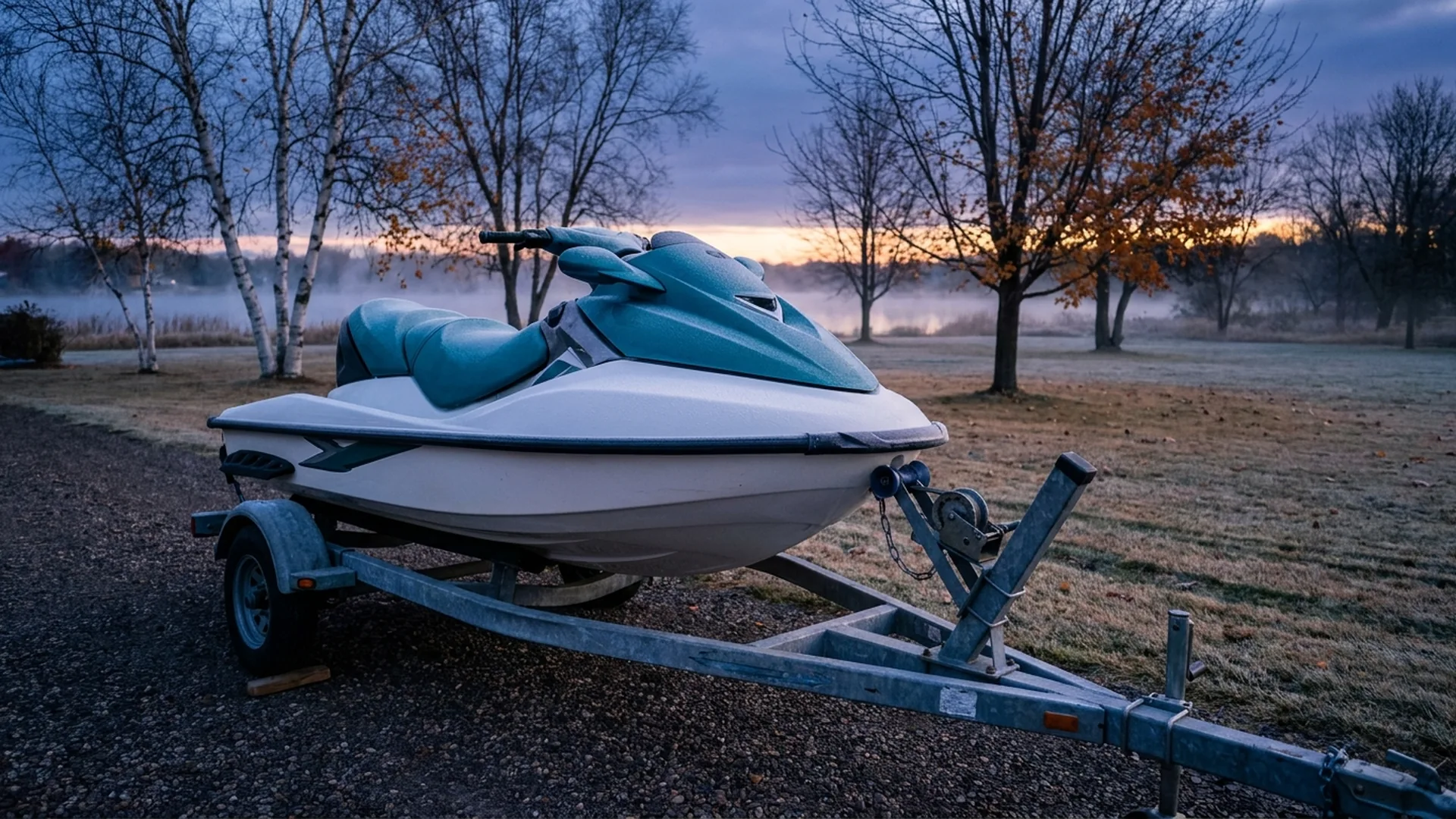
On the first hard-freeze night in October, the water still trapped in your jet ski’s cooling passages freezes and expands with enough force to crack aluminum. You will not hear it happen. You find out in May, when the engine cranks but will not start and the repair quote opens at $3,000.
A jet ski packs a lot of horsepower into a very small hull, and every square inch of the cooling system is a candidate for freeze damage the moment temperatures drop below 32 degrees. In central Minnesota, that first hard freeze usually shows up by mid-October, and the machines still sitting outside on a trailer are the ones that end up at the shop.
The winterization routine itself is not complicated. It is a two-hour Saturday project, and it is the difference between a first-try startup on Memorial Day weekend and a shop invoice that runs into four figures. This guide walks through the whole process for a modern four-stroke Sea-Doo, Yamaha WaveRunner, or Kawasaki Jet Ski, plus how to think about storage location and cover choice for a Minnesota winter.
Key Takeaways
- Freeze damage to a PWC cooling system is expensive to fix, with shop estimates commonly running $3,000 to $6,000 or more, and it is entirely preventable with the flush, drain, and fogging steps the manufacturer lays out for winter storage. [1]
- Winterize before the first hard freeze, typically late September through mid-October in central Minnesota. Waiting until snow flies is waiting too long.
- Fuel stabilizer is not optional. Manufacturers recommend treating any gas that will sit for 30 days or more, and PWCs sit for 6 to 7 months over a Minnesota winter. [2]
- Pull the battery and bring it indoors. A partially discharged lead-acid battery can freeze in an unheated bay, and freezing kills them permanently.
- Store indoors when you can. Enclosed storage eliminates UV, snow load, freeze-thaw cycles, and rodents. Outdoor tarp storage introduces all four.
Why Do You Have to Winterize a Jet Ski at All?
Because a PWC engine is water-cooled, and any water left in the cooling passages when temperatures drop below freezing will expand and crack whatever aluminum housing it is sitting inside. Water expands about 9 percent when it freezes, and inside a sealed passage that expansion generates thousands of pounds of pressure per square inch.
How a PWC sheds engine heat varies by model. Many jet skis pull raw lake or river water straight through the engine and exhaust to cool them, which is open-loop cooling. Modern Sea-Doo models instead seal the engine coolant in its own loop and route raw water only through the exhaust. [1]
Either way, raw water sits in the exhaust and cooling passages after the engine shuts off. If that water freezes, the aluminum around it cracks, and at 2025 shop rates the repair runs into the thousands of dollars per unit, with a full engine replacement often exceeding $5,000.
The other reasons stack up quickly. Ethanol pump gas absorbs moisture and breaks down in a matter of weeks. Lead-acid batteries self-discharge and then freeze. Rubber hoses and seals get brittle in cold, dry storage. Rodents love the insulated space under a jet ski cover. Every one of those problems is preventable, but only if you actually do the winterization work before the boat sits.
When Should You Winterize a Jet Ski in Minnesota?
The right time is the moment you know you are done riding for the season, and no later than the first week of overnight lows in the 30s. For central Minnesota that usually falls in the last two weeks of September or the first two weeks of October, depending on the year.
The Minnesota DNR reports the state ranks first in the nation for boats per capita, roughly one registered watercraft for every six residents, and PWCs make up a meaningful share of that fleet in the St. Cloud, Mille Lacs, and Brainerd lake corridors. [3] Most of those PWCs stop getting used by early October, and the ones that sit unwinterized through November are the ones showing up at shops in April with cracked components.
The rule of thumb is simple. If you would need a wetsuit to ride comfortably, the season is over. Pick a dry Saturday, do the two-hour winterization routine, and put the boat away clean.
What Supplies Do You Actually Need?
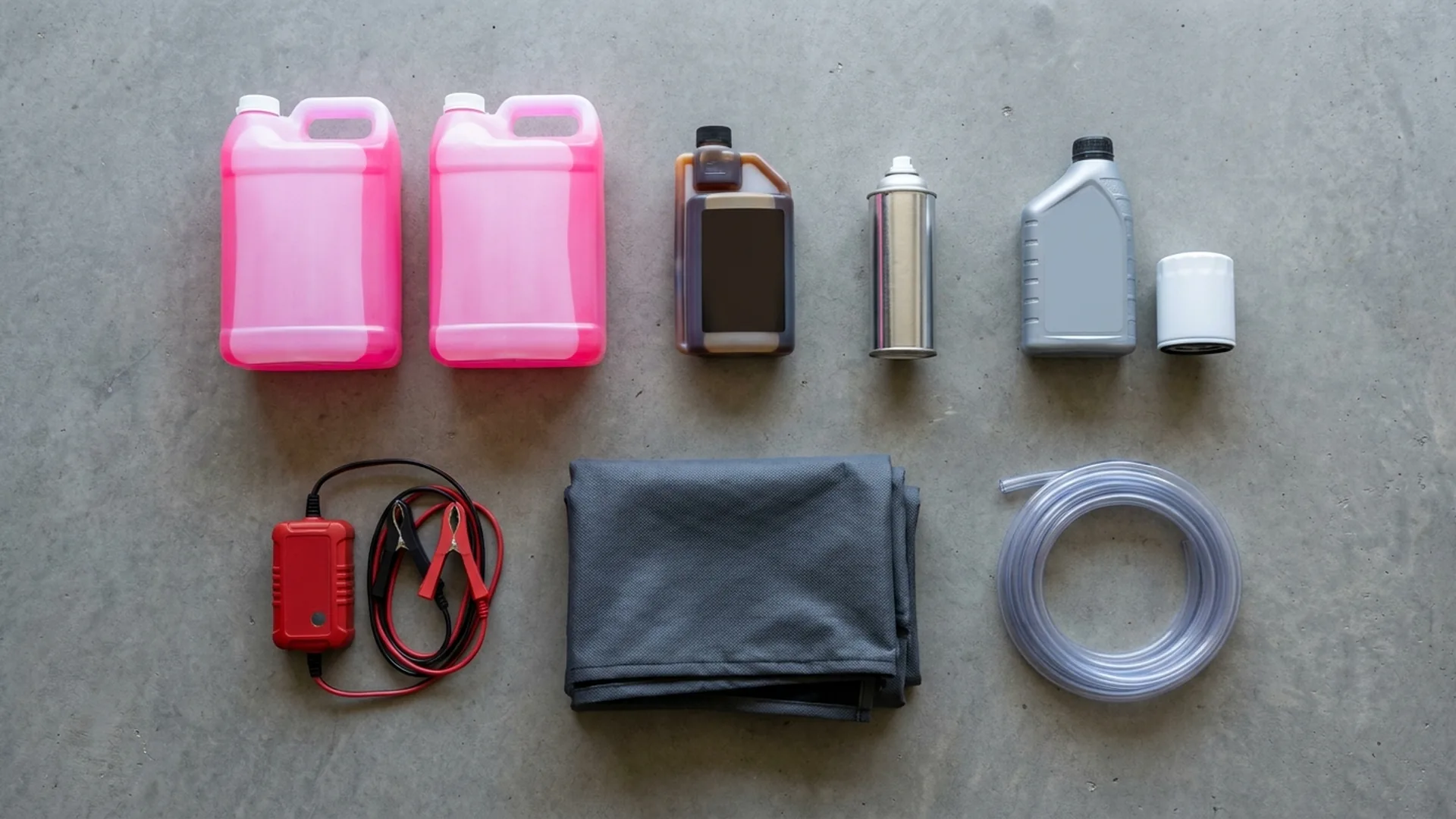
The full winterization kit runs about $60 to $100 in one-time supplies. Most of it lasts several seasons.
- Fresh gasoline to top off the tank to about 95 percent full.
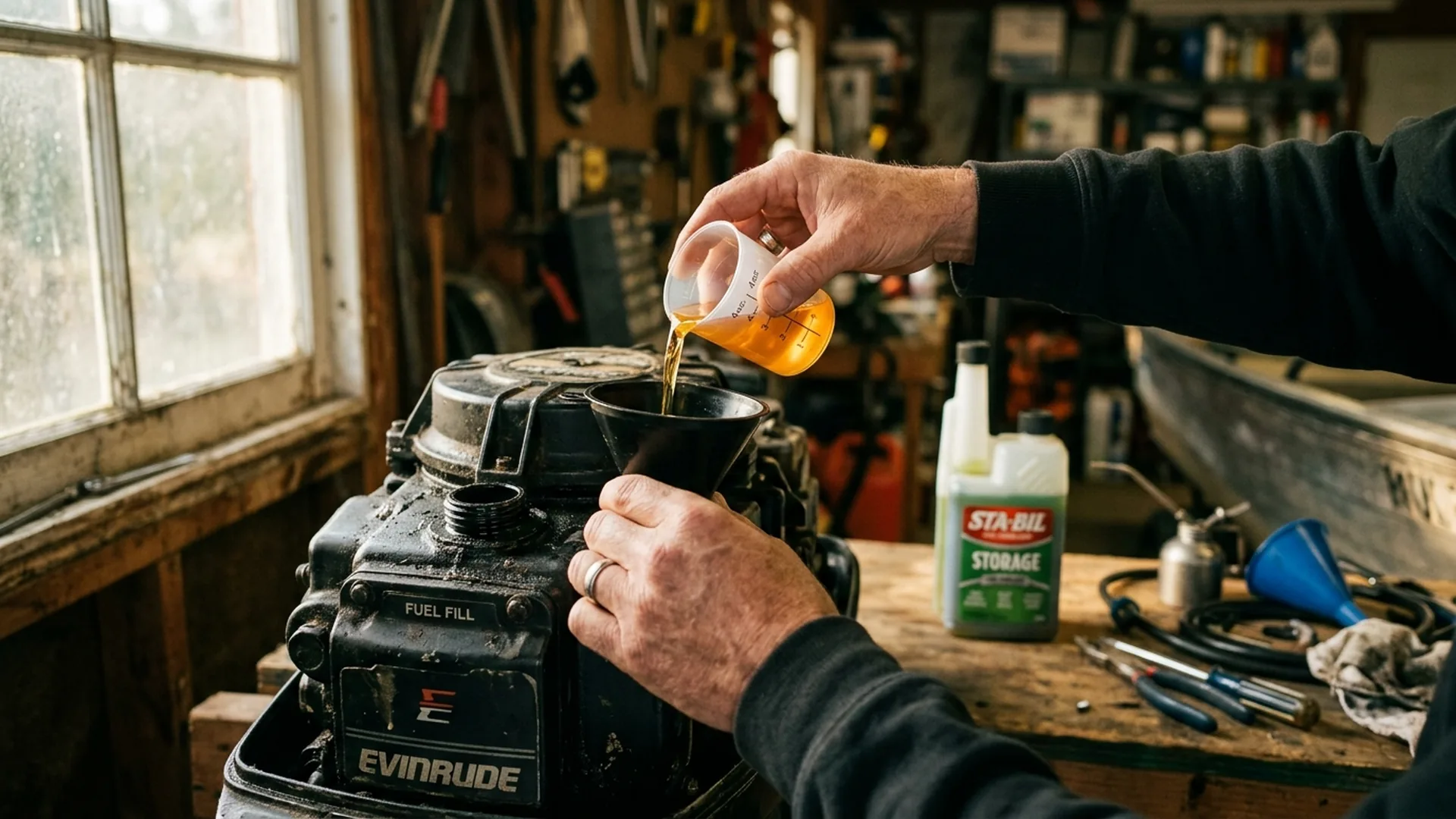
- Marine or dual-purpose fuel stabilizer (STA-BIL Marine, Star Tron, or equivalent), added at the label ratio.
- Non-toxic RV or marine antifreeze (the pink stuff, propylene glycol), 1 to 2 gallons depending on the PWC.
- Fogging oil (Sea Foam, Yamalube, or a manufacturer-approved spray).
- Fresh engine oil and filter matched to your PWC’s spec (four-stroke models only).
- Corrosion-block spray like Salt-Away, CorrosionX, or WD-40 Specialist Corrosion Inhibitor.
- Battery charger with a maintenance or float mode.
- A breathable, custom-fit PWC cover. Skip the blue plastic tarps: they trap moisture and grow mildew.
You will also want your PWC’s owner’s manual within reach, because drain-plug locations, flush port fittings, and antifreeze routing vary from model to model.
Step-by-Step: How to Winterize Your Jet Ski
The order below matters. Fuel and battery work happen before cooling-system work, and cooling-system work happens before storage prep. Doing it out of order means redoing steps, and redoing steps is how mistakes get made.
Step 1: Wash the Hull and Rinse Everything
Start with a full exterior wash while the PWC is still on the trailer. Rinse out the intake grate, scrub the hull, and clean under the seat. Any lake grit or slime left on the boat becomes six months of stain and corrosion under the cover.
Step 2: Top Off Fuel and Add Stabilizer
Fill the tank to about 95 percent with fresh gasoline, then add marine fuel stabilizer at the label ratio. Do not treat a half-empty tank: the airspace above the fuel is what pulls moisture into ethanol gas and causes phase separation over a long layup. The general rule is to stabilize any fuel that will sit for 30 days or longer. [2]
Step 3: Run the Engine to Circulate Treated Fuel
With the boat on a flush kit or with a garden hose connected to the flush port, start the engine and let it idle for 5 to 10 minutes. This pulls stabilized fuel through the injectors, fuel rail, and fuel lines. If you skip this step, only the tank is protected: the rest of the fuel system sits full of untreated gas.
Step 4: Fog the Cylinders
With the engine still running warm, spray fogging oil into the throttle body or via the spark-plug ports per your model’s procedure. Fogging coats the cylinder walls, piston rings, and valve stems with a protective film so the internals do not sit dry for six months. Modern four-strokes benefit from this as much as older two-strokes. [4]
Step 5: Flush With Fresh Water, Then Antifreeze
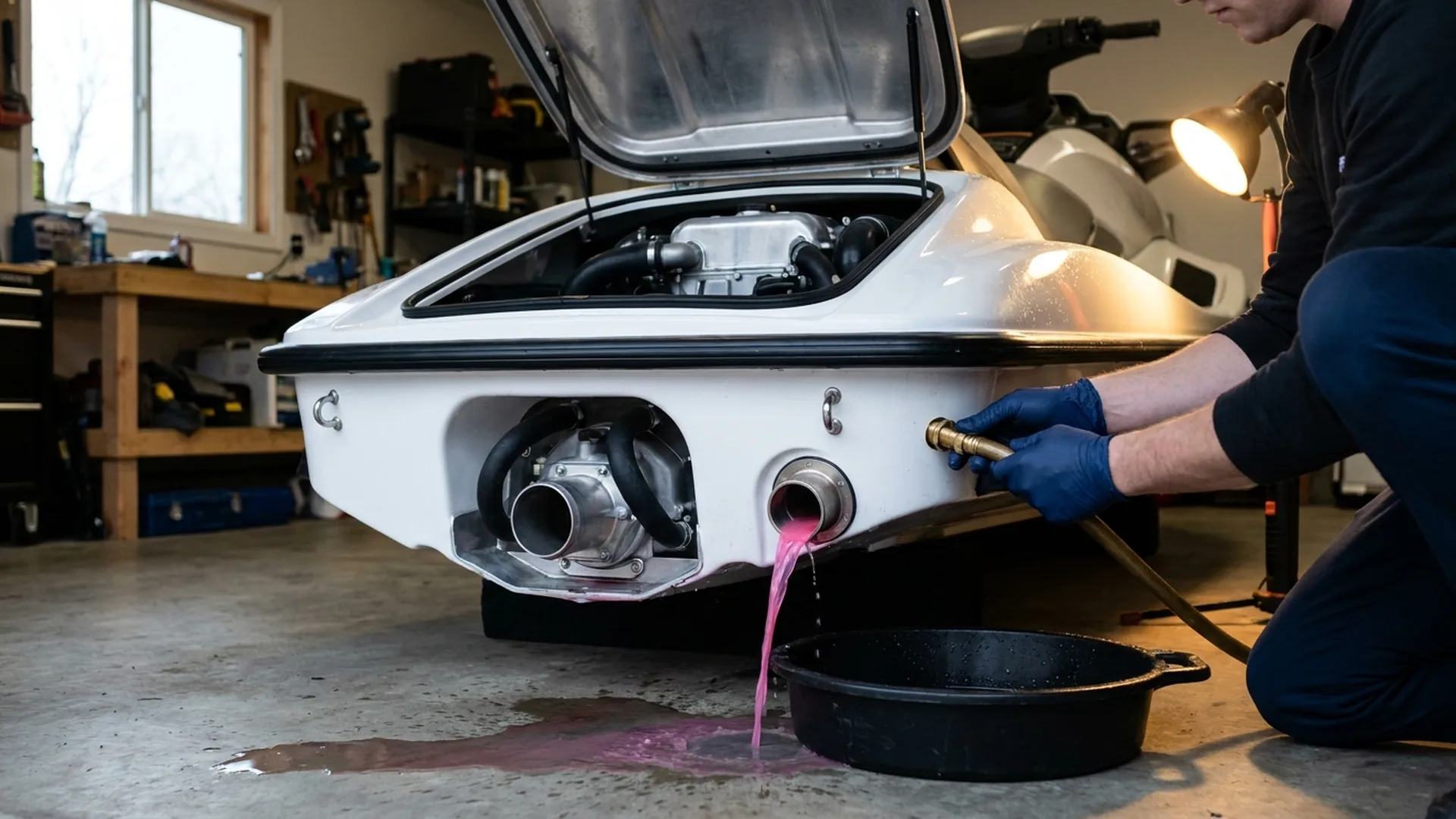
This is the step that saves the engine. Run fresh water through the flush port for 3 to 5 minutes until the cooling system is clean. Then, without shutting the engine off between steps on some models (check your manual), transition to running 1 to 2 gallons of non-toxic pink RV antifreeze through the system until pink fluid comes out the exhaust ports.
Antifreeze in the cooling loop does two things. It displaces any remaining water so nothing can freeze, and it leaves a corrosion-inhibiting film on the internal aluminum surfaces. Both matter for a PWC that will sit until May.
Step 6: Change the Oil (Four-Stroke Models)
Used engine oil holds combustion acids and moisture that will pit bearings and internal surfaces over six months of sitting. Change the oil and filter to your manufacturer’s spec so the engine goes into storage on clean lubricant. This is a 20-minute job on most modern PWCs and it pays for itself many times over.
Step 7: Pull the Battery and Bring It Indoors
Disconnect the negative terminal first, then positive, and remove the battery from the boat. Wipe the terminals with a wire brush, apply a dab of dielectric grease, and put the battery on a smart charger indoors somewhere it will not freeze. A lead-acid battery left in an unheated Minnesota bay will discharge over the winter, and a fully discharged battery can freeze and crack the case.
Step 8: Spray Corrosion Block on Electrical Connections
Open the engine compartment and hit every exposed terminal, ground point, and wiring connector with a light coat of corrosion-block spray. Six months of humidity in a storage bay is what turns clean copper into green corrosion, and green corrosion is what causes intermittent electrical faults in spring.
Step 9: Cover and Store
Snap on a breathable custom-fit cover, or better yet, park the PWC indoors and drape a light cotton cover over it. If you must store outdoors, elevate the cover slightly off the seat with a small stand or a folded blanket so water cannot pool. Set a couple of rodent-deterrent packs (dryer sheets, peppermint oil pouches, or a proper repellent) under the seat.
Where Should You Store Your Jet Ski Over Winter?
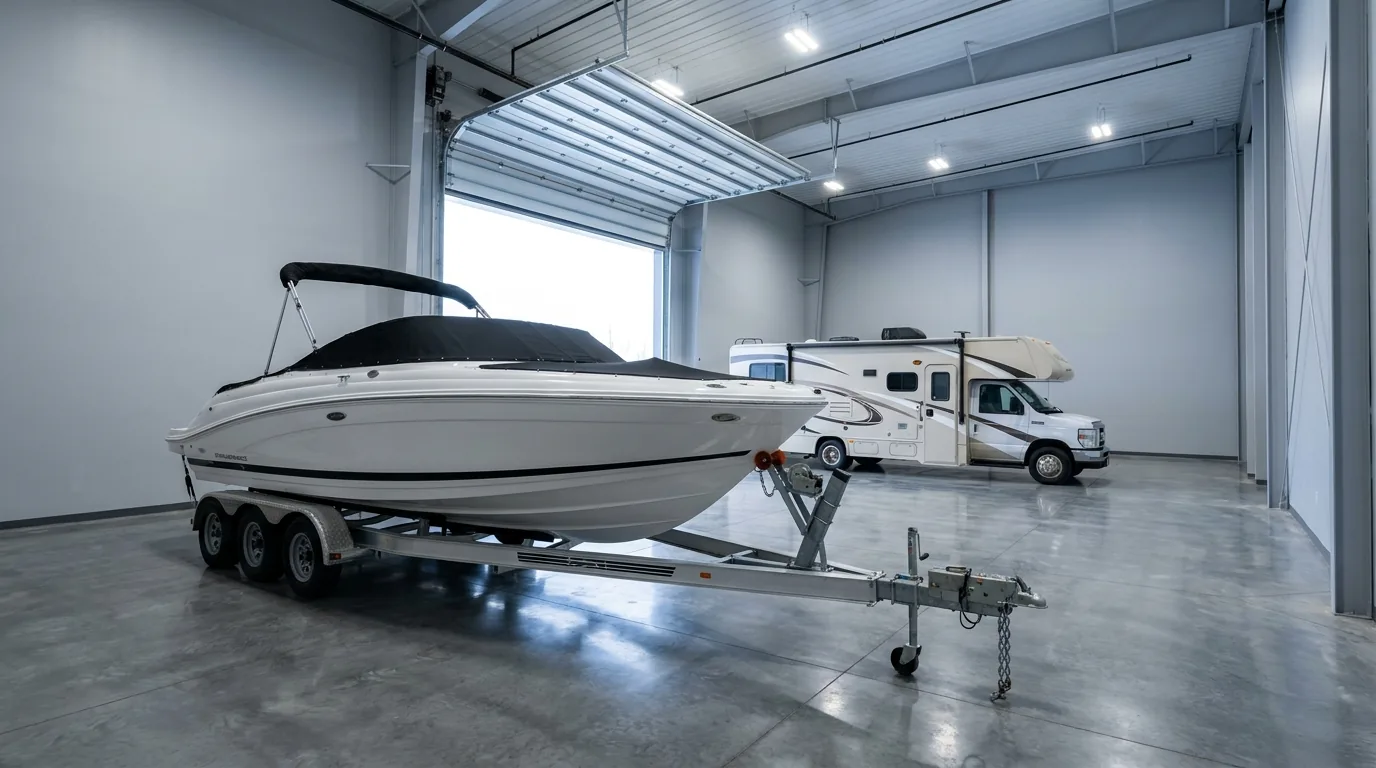
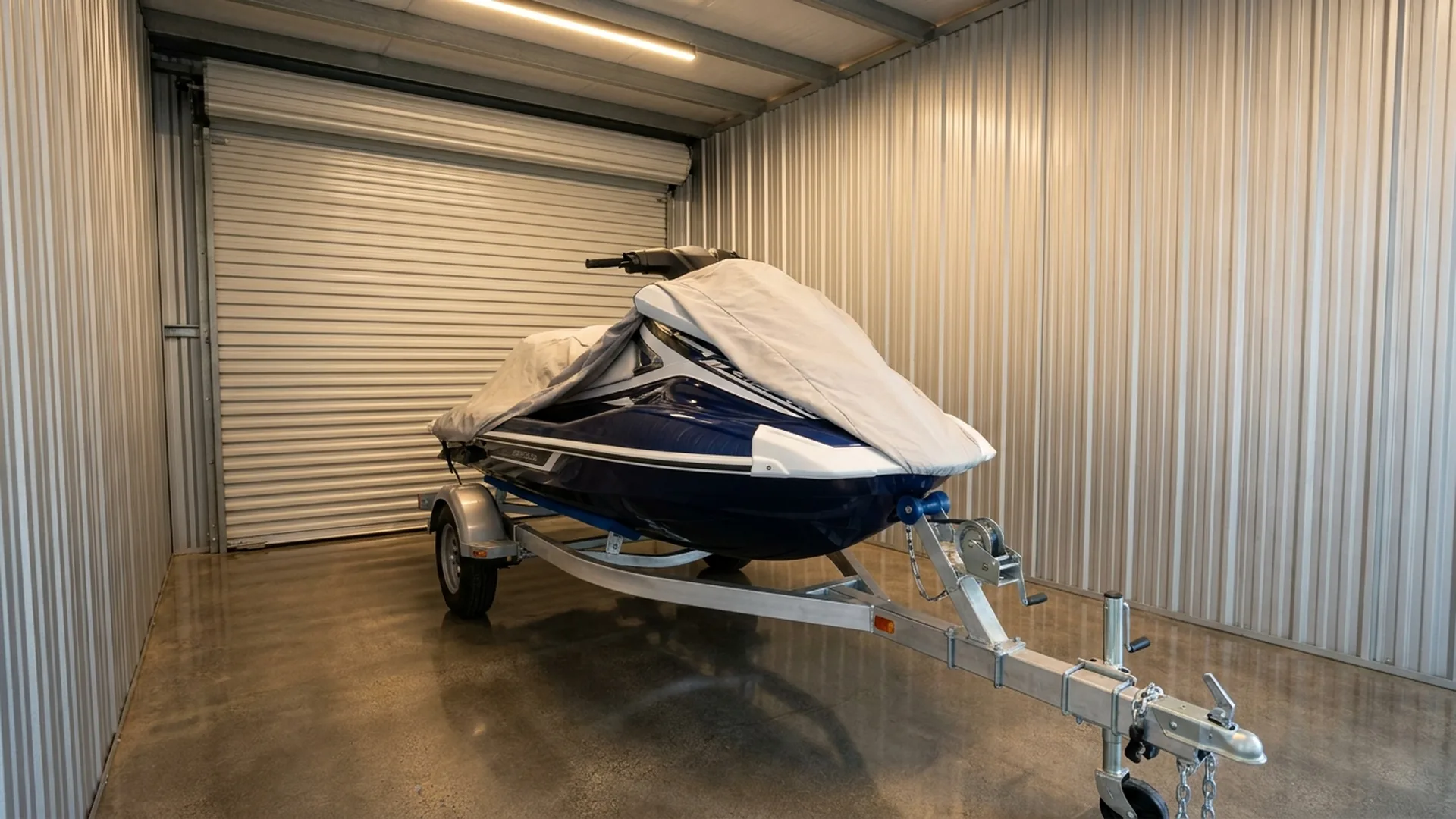
Indoor storage beats outdoor storage every time in Minnesota, and the price gap has narrowed enough that most owners can justify the upgrade. The table below compares the three realistic options for a central Minnesota winter.
| Option | Freeze & snow protection | UV protection | Typical downside |
|---|---|---|---|
| Indoor storage (garage or facility unit) | Excellent | Excellent | Higher monthly cost, drive time to facility |
| Covered outdoor (roofed but open sides) | Good for snow, none for wind-blown ice | Excellent | Still exposed to freeze-thaw and humidity swings |
| Outdoor with tarp | Poor to fair | Fair to poor (UV degrades cover) | Snow load, ice pooling, rodents, condensation under tarp |
Indoor storage matters more for PWCs than for most other watercraft because the hull is small enough to fit under an economical cover, and every square inch of gelcoat is exposed to whatever weather hits it. A single winter of UV and freeze-thaw can dull the finish and start hairline cracks that will not polish out.
What Happens If You Skip Winterization?
The failure modes are predictable, and the shop bills are not small. The five most common results of skipped or half-done PWC winterization:
- Cracked exhaust manifold or engine block from trapped water. The single most expensive failure. Repair estimates commonly run $3,000 to $6,000, and on some models the boat is not worth the fix.
- Hard start or no start from stale, untreated fuel. Injectors gum up, ignition suffers, and the engine either will not fire or runs rough for the first 20 minutes.
- Dead or damaged battery. A cheap enough fix on its own ($150 to $250), but often paired with a corroded harness that took the battery down with it.
- Corroded electrical connections. Intermittent gauge readings, no-start conditions, and blown fuses that trace back to greened-over terminals.
- Rodent damage inside the hull. Chewed wiring harnesses, nests in the airbox, and stains on the seat foam. Rodent or vermin damage is often excluded from boat insurance, so it is worth checking your own policy.
As of 2025, BoatUS estimates that improper winter storage causes more than $50 million in preventable damage to recreational boats every year nationally, and PWCs sit right in the middle of that number. [5] The winterization checklist above prevents nearly all of it.
Store Your PWC Indoors This Winter
Due North Storage offers clean, dry indoor units off Highway 10 near St. Cloud. Skip the tarp, skip the freeze-thaw, and roll out ready to ride in May.
What We See at Due North Storage
Every spring, the split between “boat starts on the first crank” and “boat needs to go to the shop” comes down to what happened in October. Owners who ran the antifreeze cycle, treated the fuel, pulled the battery, and stored indoors almost always fire up clean.
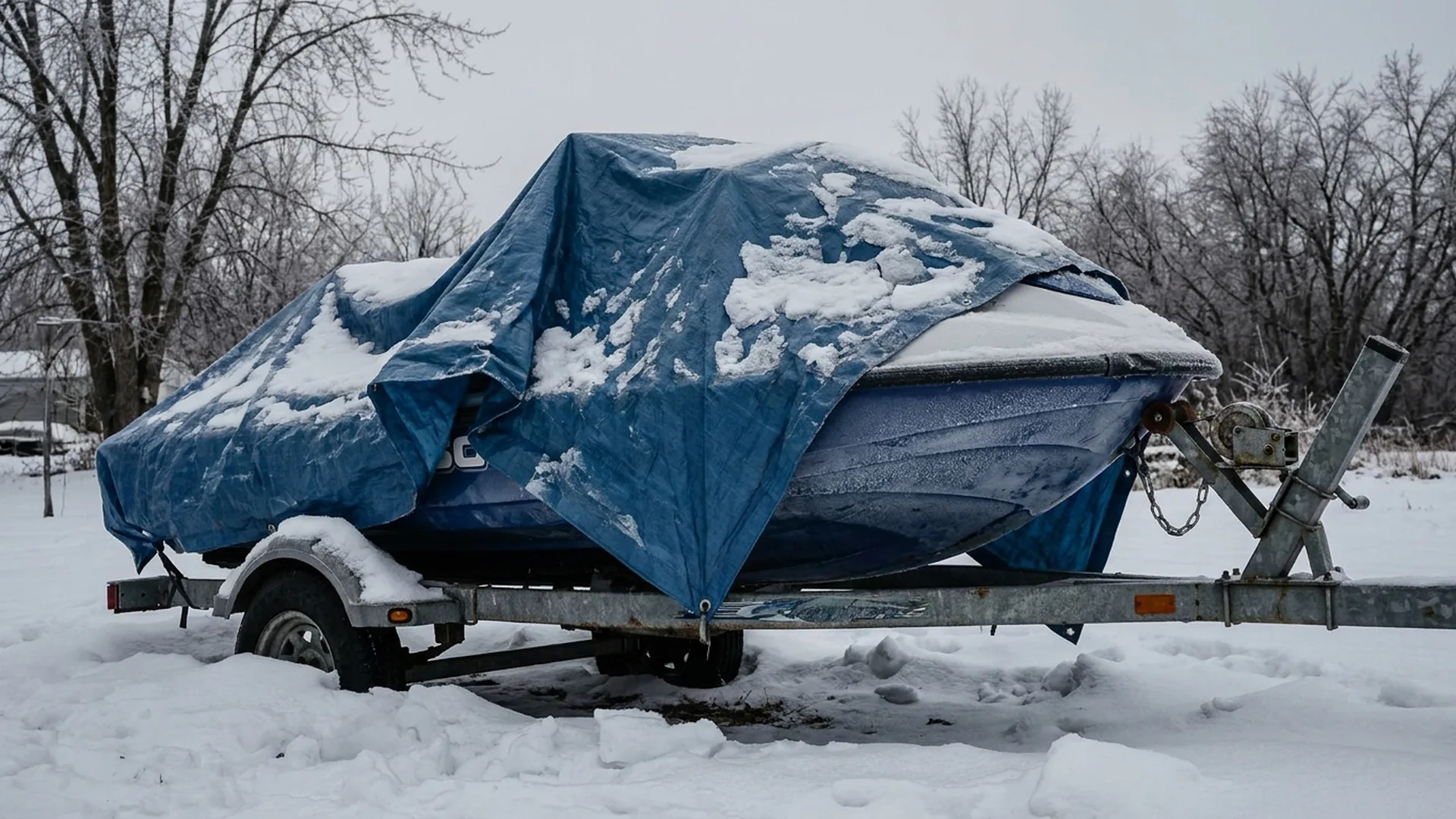
Owners who left a PWC on a trailer under a blue tarp with the last gas station gas still in the tank tend to get one of the failure modes from the section above. The math strongly favors the two-hour Saturday winterization plus an indoor bay.
If you are also winterizing the rest of the fleet, our companion guides on boat winterization, pontoon winterization, and RV winterization walk through those specific procedures.
Frequently Asked Questions
When should I winterize my jet ski in Minnesota?
Winterize once you know you are done riding for the season and before overnight lows drop into the 30s, typically late September through mid-October in central Minnesota.
Waiting until a hard freeze arrives risks trapped water in the cooling passages, and trapped water is what cracks blocks and manifolds.
Can freezing water really crack a jet ski engine?
Yes. Water expands about 9 percent when it freezes, and that expansion inside a closed cooling passage generates enough force to crack aluminum manifolds, exhaust components, and even engine blocks.
A cracked block on a modern PWC is often a total loss, with repair estimates commonly running $3,000 to $6,000 or more.
Do I need to fog the cylinders on a four-stroke jet ski?
Yes. Modern four-stroke PWCs from Sea-Doo, Yamaha, and Kawasaki still benefit from fogging oil because the cylinder walls sit dry for months during Minnesota storage, and dry cylinders let rust form on the bore.
A quick fogging spray while the engine runs coats the internals and prevents that.
Should I leave the battery on the jet ski over winter?
No. Pull the battery, clean the terminals, and put it on a smart maintenance charger indoors. A lead-acid battery left in an unheated Minnesota storage bay from October to May will freeze if fully discharged.
Even a partial discharge cycle from parasitic drain shortens battery life significantly.
Is indoor storage worth it for a jet ski?
For central Minnesota, yes. Indoor storage keeps the hull out of UV, prevents ice and snow load on the cover, and eliminates the freeze-thaw cycles that stress seals, hoses, and gelcoat.
Owners who store indoors typically report far fewer spring surprises than those who leave a PWC on a trailer under a tarp.
Do I need to change the oil before storage on a four-stroke jet ski?
Yes. Used engine oil holds acids and moisture that eat at bearings and internal surfaces if left to sit for six months.
Change the oil and filter as part of the winterization routine so the engine goes into storage on clean oil and comes out ready to run in spring.
What is the biggest mistake owners make winterizing a PWC?
Rushing the cooling-system flush and skipping the antifreeze step. Water left in a jet ski’s cooling passages is the single most expensive failure point in winter storage.
Running antifreeze through the system after flushing is the cheap insurance policy that prevents it.
Final Thoughts
A jet ski is a $12,000 to $25,000 machine sitting on a trailer in a driveway. Two hours of winterization in October is the entire difference between rolling out clean in May and rolling into a service bay in April.
Treat the fuel, run the antifreeze, pull the battery, change the oil, and get the boat indoors if you can. Do that, and next season starts with a first-try startup and a full tank of ready-to-ride fun.
Indoor PWC Storage in Central Minnesota
Clean, dry, secure indoor units off Highway 10 near Saint Cloud. Reserve before the fall freeze.
Sources
- BRP Sea-Doo. How to Winterize Your PWC (Personal Watercraft). Retrieved 2026-09-08. sea-doo.brp.com
- Gold Eagle (STA-BIL). STA-BIL Storage Fuel Stabilizer: Ethanol Fuel and Storage Guidance. Retrieved 2026-09-08. goldeagle.com
- Minnesota Department of Natural Resources. Boating, Canoeing and Kayaking (Minnesota Facts). Retrieved 2026-09-08. dnr.state.mn.us
- Yamaha Motor Corporation. Maintenance Matters: WaveRunner Extended Storage and Fogging Guidance. Retrieved 2026-09-08. yamahawaverunners.com
- BoatUS. To Winterize Or Not To Winterize? 2025. Retrieved 2026-09-08. boatus.com