The first warm Saturday in April, you peel the cover off the boat and a mouse bolts from a nest in the captain’s chair. The vinyl is shredded, the wiring underneath is chewed, and the season has not even started. That morning was decided back in October, by one choice: where it spent the winter.
The cheapest storage option in central Minnesota is a spot in your driveway. It is also the most expensive one, because that is where the freeze damage, rodent chewing, and sun-baked gel coat get done. Where you park a boat or RV for the off-season decides how much of it survives to next spring.
Central Minnesota is thick with rigs that need an off-season home. As of 2025, Minnesota ranks first in the nation for registered boats per capita, roughly one for every six residents, [1] and RV makers shipped 342,220 units nationwide in 2025. [2] Most of them sit unused for months, and where they sit is the whole question.
Storage comes in three flavors: fully enclosed indoor units, open-sided covered canopies, and open-air outdoor lots. Each has a price, and each has a real cost that shows up months later. This guide walks through what you actually get for the money, so you can match the option to the boat or RV instead of the sticker price.
What Are Your Three Storage Options?
Storage facilities usually market three tiers, and knowing which tier you are looking at prevents a lot of surprise the first winter. The names get used loosely, so it helps to define them the way the industry actually does.
Indoor Storage (Fully Enclosed)
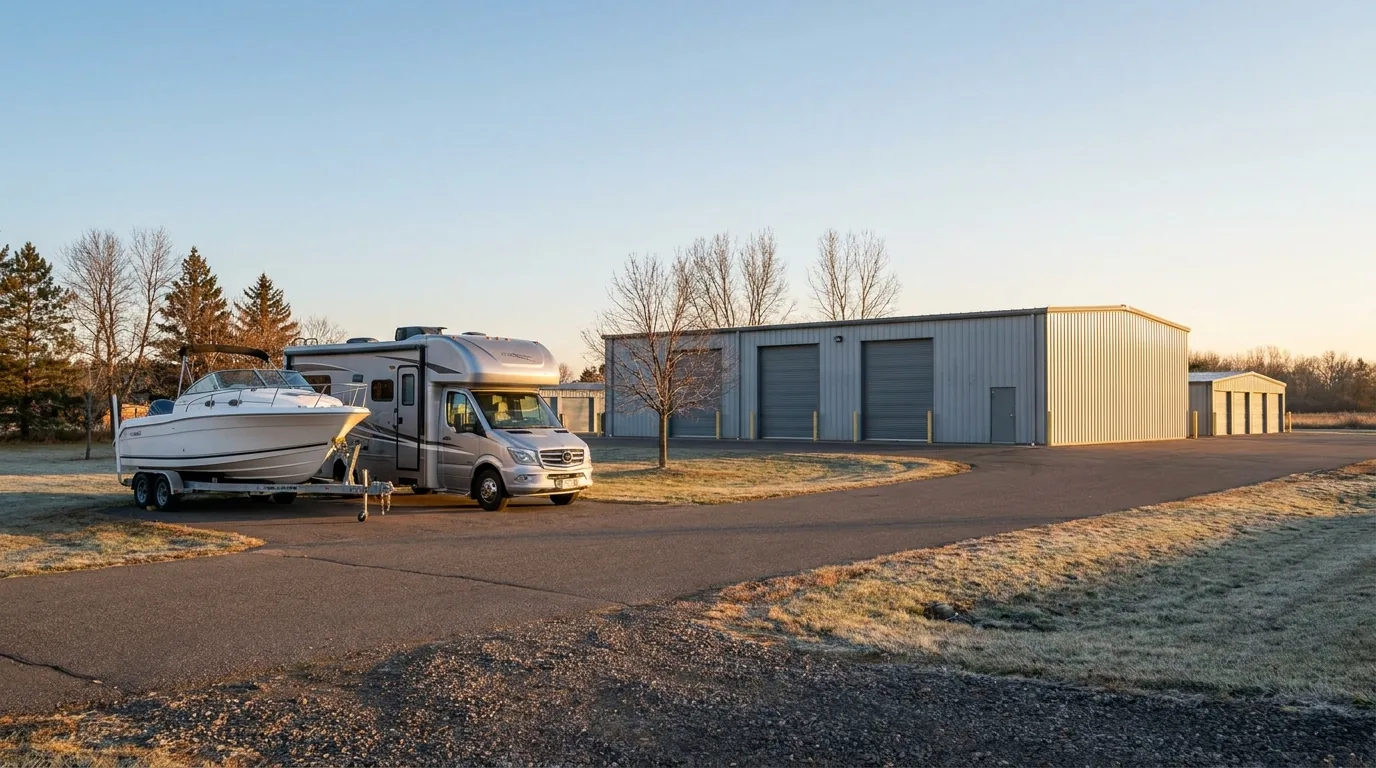
Indoor units are walled and roofed, with a lockable door. You back the boat or RV in, close the door, and it sits in a sealed bay for the off-season. Premium indoor units include electricity, drive-in access, and door heights that fit tall coaches and pontoons.
What you get: no snow load, no UV, no wind-driven rain, and a much smaller opening for rodents to find. What you pay: the highest per-month rate of the three options, offset by the fact that you skip most weather-related repair bills.
Covered Storage (Canopy)
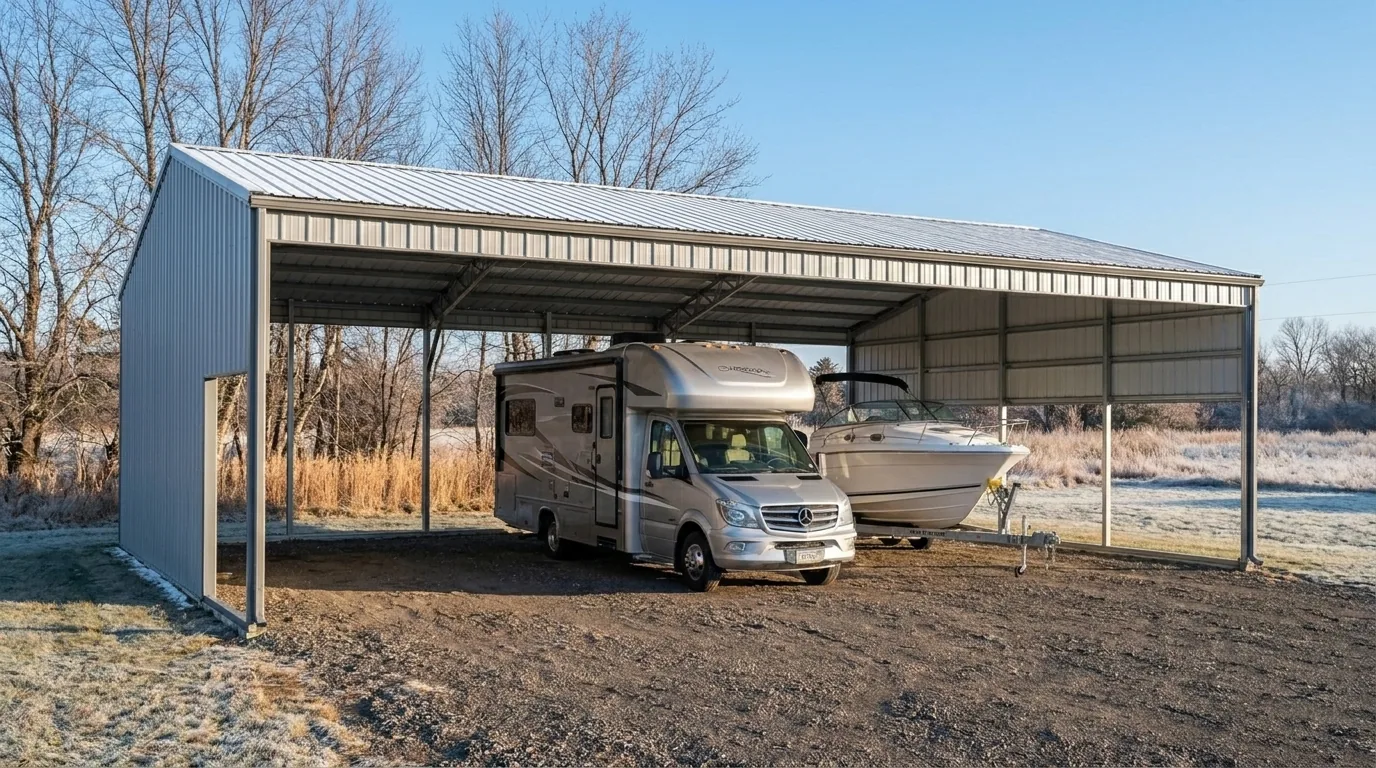
Covered spots have a roof and often side walls on one or two sides, but the ends and at least one long side are open. Think of a pole barn without full walls. Snow load lands on the canopy instead of the rig, and the sun does not hit the deck directly.
What you get: solid protection from snow load and UV, plus a break from most precipitation. What you pay: less than indoor, more than open outdoor. What still gets in: blowing snow, blowing dust, road-salt spray, and small animals looking for shelter.
Outdoor Storage (Open Lot)
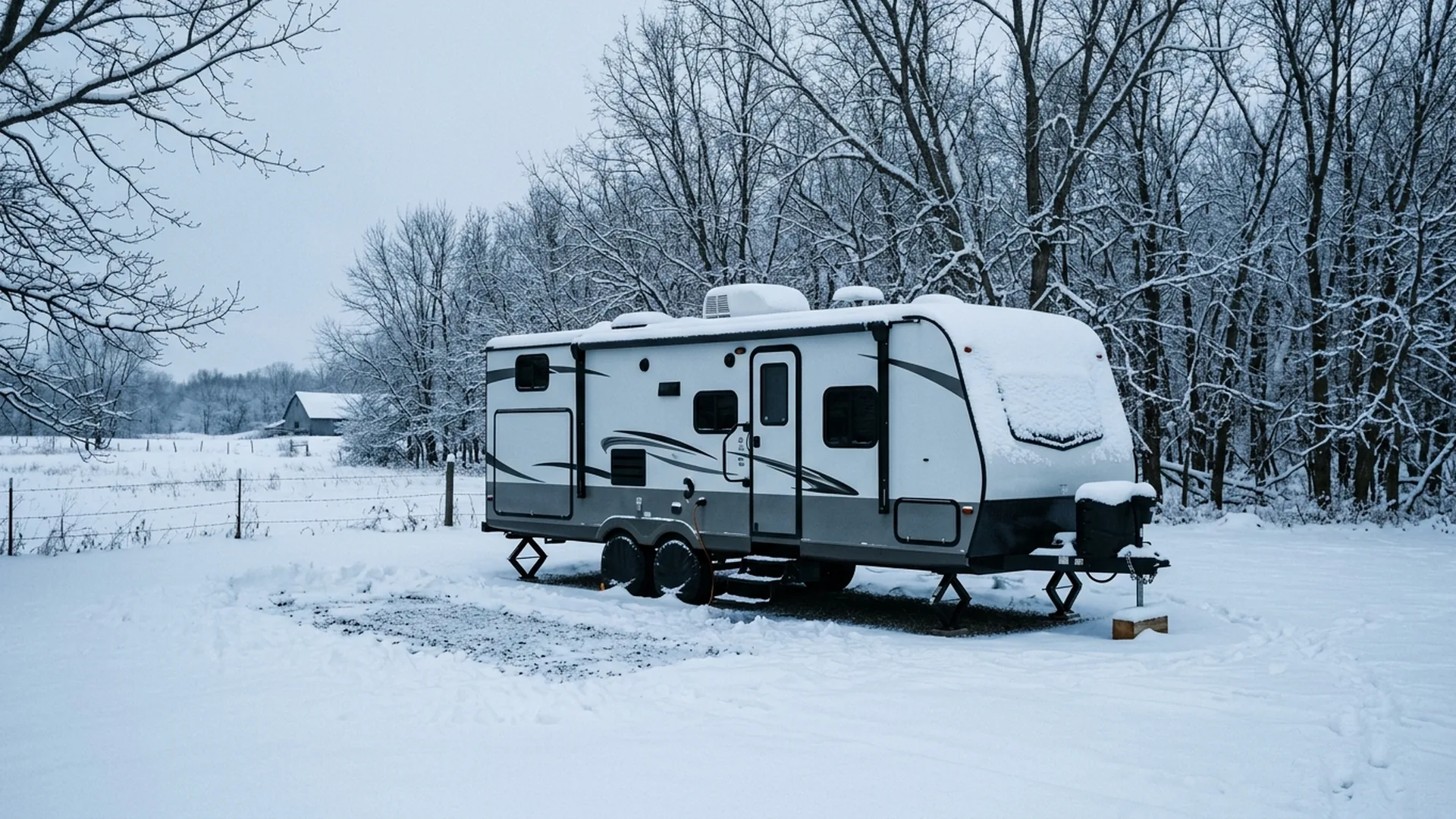
Outdoor storage is a marked parking spot or a section of gravel or asphalt with no roof or walls. It sits under the sky for six to seven months.
What you get: the lowest monthly cost, plus easy back-in and pull-out access. What you pay: everything else. Snow accumulates on the cover, sun bakes the finish, freeze-thaw cycles work the seams, and rodents get a wide-open runway.
How Much Protection Does Each Option Actually Offer?
Protection breaks down into four things a boat or RV cares about: freeze exposure, snow load, UV and weather, and rodent pressure. Here is how the three storage types stack up on each.
| Factor | Indoor | Covered | Outdoor |
|---|---|---|---|
| Freeze exposure | Same as outside air (unheated units), but no wind chill or blowing snow on seals | Same as outside, some wind protection | Full exposure, wind chill, freeze-thaw hitting every seam |
| Snow load | Zero on the rig | Zero on the rig; canopy takes the weight | Heavy load risk on covers, roofs, and frames |
| UV and weather | Fully shielded | Roof blocks direct sun and rain | Continuous UV, rain, and salt spray |
| Rodent pressure | Low; single entry point | Moderate; open sides invite small animals | High; no barrier at all |
Notice what indoor storage does not do: it does not heat the space. Most indoor storage in central Minnesota is unheated, so the interior temperature still drops well below freezing on a January night. That is why winterization matters regardless of where it spends the winter.
What indoor storage does do is remove everything else. No snow load on the roof, no UV on the gel coat, no blowing salt on the aluminum, no rodent freeway from the field next door. It sits in still, dry air for seven months.
What Does Storage Cost in Central Minnesota?
Prices swing quite a bit between facilities and unit sizes, but the general shape holds. Outdoor lots run the cheapest, canopies sit in the middle, and enclosed indoor bays cost the most. Location matters too: units close to the highway with easy access typically list higher than remote lots that require a longer drive to reach.
Rough monthly ranges for secure boat and RV storage near St. Cloud, whether you own a boat, an RV, or a camper:
- Outdoor lot: $40 to $90 per month, depending on lot access and whether the surface is gravel or paved.
- Covered canopy: $75 to $150 per month, usually with basic electrical shared across the row.
- Indoor unit: $125 to $280 per month for premium sizes from 11×22 up to 14×40, typically with individual electricity and drive-in access.
The math changes when you fold in what each option costs when something goes wrong. When BoatUS analyzed roughly a decade of its marine insurance freeze claims, more than 75% involved a cracked engine block or exhaust manifold, and the group estimates improper storage causes over $50 million in preventable damage nationwide every year. [3]
A single cracked block can total an older outboard. Replacing one commonly runs well above $10,000 before labor. Set that against the roughly $120 per month gap between outdoor and premium indoor storage over a seven-month layup, and the “expensive” option starts to look like the cheap one.
Which Storage Type Wins for a Minnesota Winter?
Winter is where the three tiers separate the most. St. Cloud sits below freezing for just over three months a year, from late November into early March, and in the 1991–2020 climate normals its average January low sits near 2.9°F. [4] Water expands about 9% when it freezes, [5] with enough force to crack a cast-iron engine block. [3]
Add the two facts together and any water left in the engine, cooling system, or water lines becomes a repair bill. That is true whether it winters indoors or outdoors, which is why full winterization is the price of entry either way. Where storage type matters most is in the second layer of damage: the roof, the finish, the interior, and the electrical.
Outdoor storage catches all of it. A February snowstorm dumps eight inches on the cover, the sun warms it in the afternoon, it refreezes overnight, and by March the seams under it have been worked loose. Mice hop up from the field, find a gap, and spend the winter nesting in the cushions.
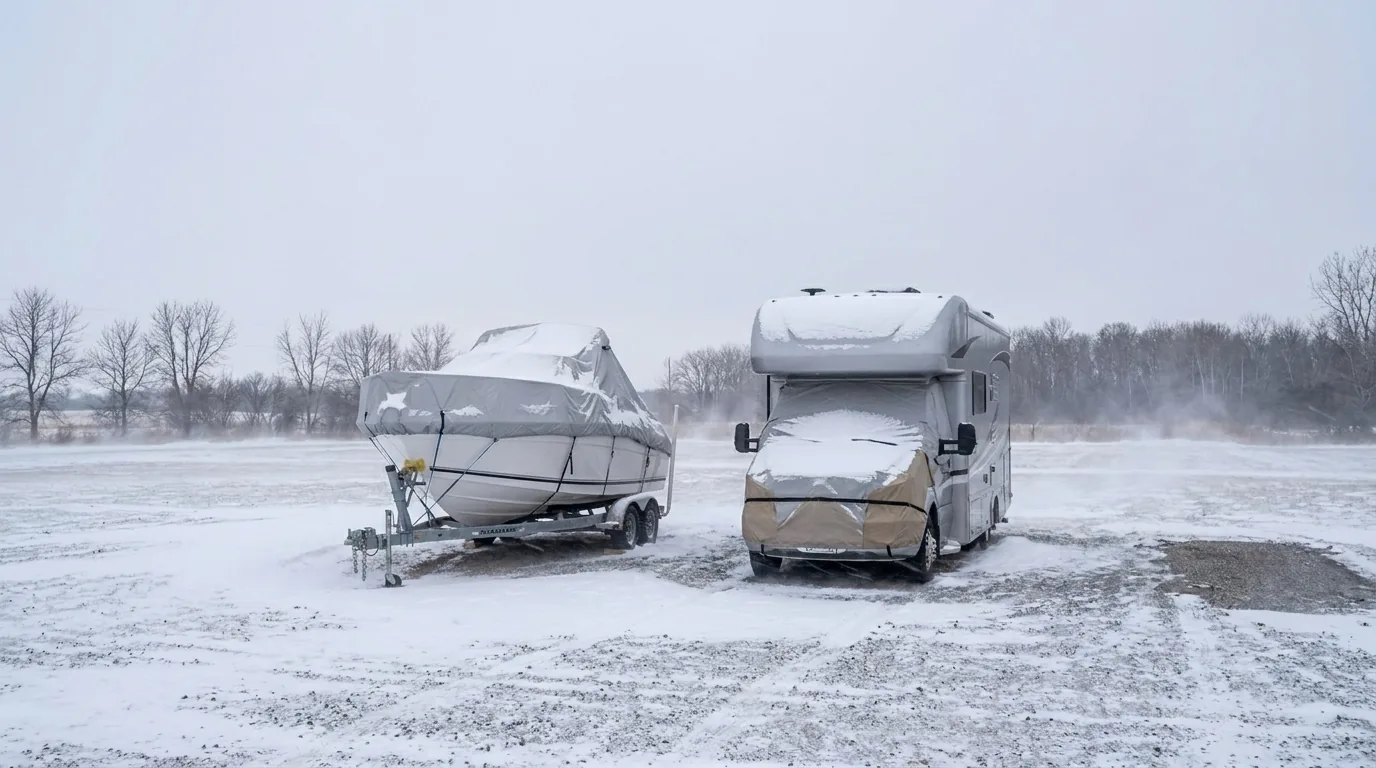
Indoor storage removes those variables at once. The cover, the tires, and the electrical harness look the way they did in October, because nothing has been working on them all winter. If you are already going to winterize the RV or the boat, indoor storage is what protects the work you just did.
What About Summer Storage?
Summer is easier on a stored rig, but not free. Sun exposure adds up fast on vinyl seats, gel coat, and tire sidewalls, and one that sits three weeks between weekend uses in a full-sun outdoor lot ages noticeably in one season.
Frequent-use owners often park outdoor during the boating and camping months, when the boat or RV is out on the water or on the road most weekends. Occasional-use owners tend to keep indoor storage year-round so the finish and the interior stay showroom clean between longer gaps.
Covered storage splits the difference well in summer. The roof blocks direct sun and the daily rain hits the canopy instead of the deck, and the open sides let air circulate so nothing stays damp. If it lives outdoors during the season, a canopy spot is a small upgrade with a real payoff for the finish.
How Do You Choose the Right Option for Your Rig?
Match the storage tier to what you own and how you use it, then check that the bay actually fits the rig; our guide to what size storage unit you need walks through the dimensions. The bigger the investment and the longer the layup, the more indoor storage makes sense.
A rough sorting rule:
- Choose indoor if the rig is worth $30,000 or more, sits for four or more months at a time, has a battery you want on a maintainer, or has soft goods (vinyl seats, canvas, custom interior) you want to protect.
- Choose covered if you want a middle-tier upgrade over open outdoor, or if it is used frequently in the off-season and you mostly need snow-load and UV protection.
- Choose outdoor if the boat or RV is inexpensive to replace, you keep an eye on it through the winter, and you are comfortable with a full winterization routine and a high-quality cover.
There is a fourth factor most owners forget: HOA rules and city ordinances. A lot of central Minnesota neighborhoods cap how long an RV or boat can sit in a driveway, and some ban them entirely. If the driveway is not really an option, the choice narrows to which paid storage tier fits the rig and the budget.
What We See at Due North Storage
The pattern is consistent every spring. The rigs that come out ready to launch or roll are almost always the ones that spent the winter indoors, whether that is with us or in an owner’s shop. The rigs that come in for surprise repairs almost always spent the winter outside under a tarp.
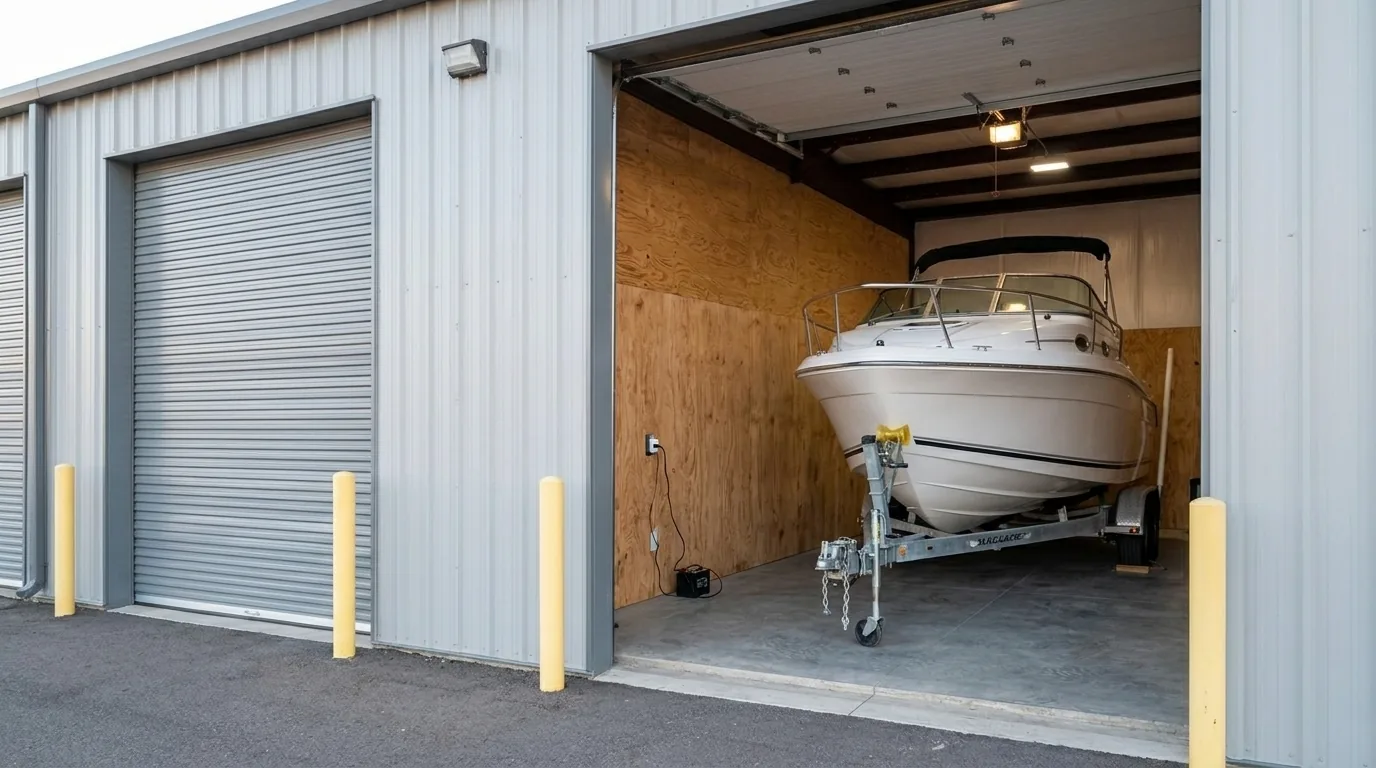
Freeze damage gets the headlines because it is the most expensive single failure, and that piece is preventable with proper winterization regardless of storage. What indoor storage prevents is the slow-motion damage: the faded gel coat, the mildew on the seats, the mouse-chewed wiring harness, the cracked cover seam that leaked water into the cabin from December through March.
Owners tell us the calm feeling is worth as much as the physical protection. You are not checking the weather app after every storm to see if you need to sweep the roof. The rig is safe, dry, and ready when you are.
Store Indoors This Season
Due North Storage offers indoor units up to 14×40 with electricity included, just off Highway 10 in the St. Cloud area. Skip the snow load, the freeze-thaw, and the spring surprises.
Final Thoughts
The right storage tier is the one that matches the value of the rig and the length of the layup. Outdoor is cheap and honest about what it delivers. Covered is a real upgrade for snow load and UV, but leaves the sides open. Indoor costs the most up front and, for most Minnesota owners, quietly pays for itself over one bad-luck winter avoided.
Whatever you choose, do the winterizing work in October. The rig that arrives at storage properly prepped comes out clean in April. The rig that skips those steps comes out with a repair estimate. Where it sleeps decides how much of the season it costs you.
Frequently Asked Questions
Is indoor storage worth the extra cost in Minnesota?
For most boat and RV owners, yes. Indoor storage removes snow load, UV, and rodent pressure, and units with electricity keep the battery on a maintainer all winter.
Given that a replacement outboard can top $10,000, the price gap between outdoor and indoor storage usually pays for itself the first spring you skip a weather-related repair.
Does a covered outdoor space protect against Minnesota cold?
A canopy blocks snow and UV, but the air temperature inside is still the outside temperature. Freeze damage happens the same way under a canopy as in the open, so you still need to fully winterize the rig.
Covered storage is better than open outdoor, but it is not a substitute for winterization.
How much does boat or RV storage cost in central Minnesota?
Outdoor lots typically run the lowest, covered canopies sit in the middle, and indoor units cost the most. In the St. Cloud area, indoor vehicle units generally range from about $125 to $280 a month depending on size.
Premium features like electricity, drive-in access, and 14×40 door heights are usually included in that range.
Can I skip winterizing if I use indoor storage?
No. Most indoor units are unheated, so the interior temperature still drops well below freezing on a January night. Winterize the water system, stabilize the fuel, and store the battery correctly regardless of where the rig sleeps.
Indoor storage protects the exterior and interior; winterization protects the mechanicals.
Which storage type is best for a pontoon?
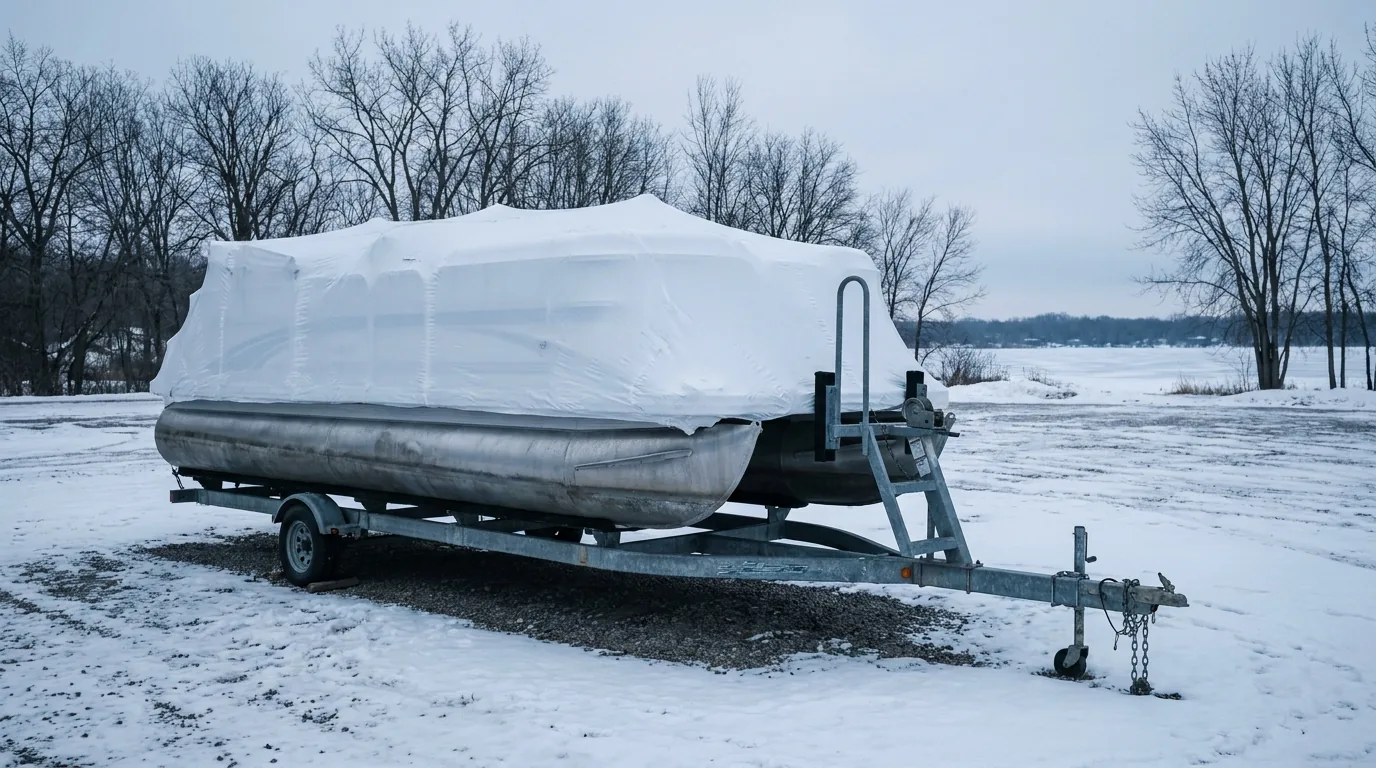
Indoor storage suits pontoons best because it eliminates the snow load that crushes covers, blocks the UV that fades vinyl seats, and keeps out the mice that shred foam cushions.
If indoor is not available, a properly vented shrink-wrap job under a canopy is the next best option.
Does outdoor storage void my RV or boat insurance?
Not usually, but many policies exclude freeze damage and rodent damage as preventable maintenance rather than covered losses.
Read your policy before deciding: some insurers offer premium discounts for indoor storage, and the payout picture on a claim often looks very different between outdoor and indoor storage.
Do I need indoor storage in the summer too?
Not always, but sustained sun exposure damages gel coat, vinyl, and tires faster than most owners realize. If your rig sits for weeks between uses in a sunny lot, indoor storage adds meaningful lifespan.
Frequent-use owners often park outdoor in summer and switch to indoor for winter.
Indoor Boat & RV Storage in Central Minnesota
Clean, dry indoor units up to 14×40 with electricity included, off Highway 10 near Saint Cloud and Little Falls. Get your rig into a bay before the season fills up.
Sources:
[1] Minnesota Department of Natural Resources. Boating, Canoeing and Kayaking (Minnesota Facts). Updated May 2025. Retrieved 2026-07-28.
[2] RV Industry Association. RV Shipments End 2025 at 342,220 Units, Modest 2.5% Growth Over 2024. December 2025. Retrieved 2026-07-28.
[3] BoatUS. Your Boat Engine’s Chillin’ (Winterizing). Retrieved 2026-07-28.
[4] NOAA / National Weather Service, via St. Cloud State University Climate Office. January Normal Data for Saint Cloud, Minnesota (1991–2020). Retrieved 2026-07-28.
[5] U.S. Geological Survey, Water Science School. Water Density. Retrieved 2026-07-28.